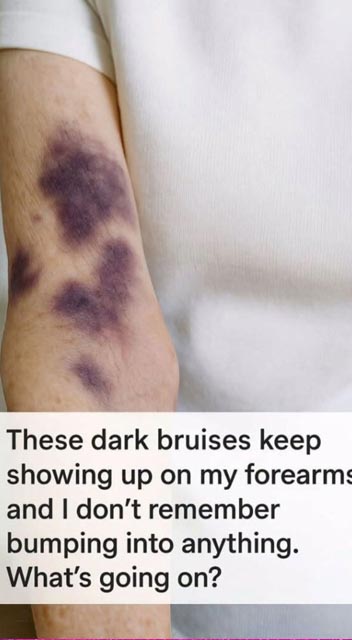
A dark bruise appears, and you cannot remember a single injury. For many older adults, that unsettling discovery reflects changes quietly unfolding beneath the skin, sometimes amplified by years of sunlight or everyday medicines. But while the explanation is often harmless, knowing which changes deserve medical attention can help you recognize when your body may be sending a warn…
Forearm bruises can look frightening, especially when they seem to appear overnight. As skin ages, it loses collagen and protective cushioning, leaving small blood vessels vulnerable to unnoticed bumps. Accumulated sun damage adds to that fragility. One common result, called actinic purpura, causes usually harmless purple patches on the forearms and hands. Aspirin, anticoagulants, corticosteroids, and some supplements can also contribute. Discuss these with your clinician, but never stop prescribed medication on your own.
- My Husband Abandoned Me with Newborn Triplets – Years Later I Accidentally Met Him Again

When Allison’s husband vanishes just days after she gives birth to triplets, she’s forced to rebuild her life from […]
- The Woman Everyone Ignored…

On a quiet neighborhood street, an elderly woman sat alone on the curb almost every day while most people passed her […]
Protecting delicate skin starts with sunscreen, long sleeves, gentle handling, and regular moisturizing. A wrapped cold compress may help after a fresh bump; toothpaste and vinegar are not proven fixes. Seek medical advice for sudden, frequent, unusually large, or painful bruises, particularly alongside nosebleeds, bleeding gums, fatigue, or unexplained weight loss. Photos and a medication list can help your clinician assess the pattern. Familiar bruising may be benign, but a new pattern deserves attention rather than guesswork.