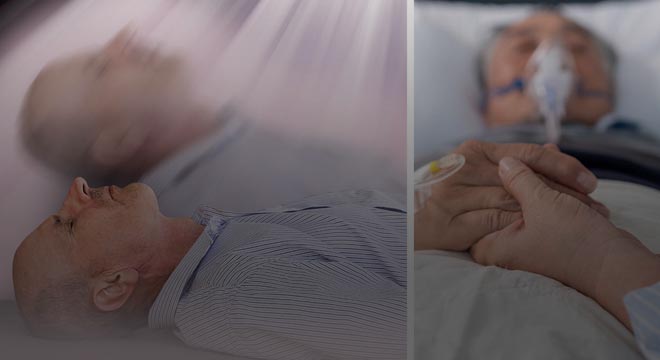
Hospice workers spend their careers beside people during some of the most intimate and difficult hours imaginable.
Hospice volunteer programs
- On Christmas Eve, my family left my 9 year old niece at an empty

I read it again. Family vacation guide Then a third time. Whoever sent it knew exactly who was involved. And they had […]
- My Neighbor Charged Her Electric Car From My House Every Night Without My Permission – I Didn’t Call the Authorities, but I Did Something Better to Teach Her a Lesson
Eleanor snapped the moment the paint fell.For years, she’d swallowed her anger, watched her things vanish, and told […]
They comfort patients whose lives are coming to an end, reassure frightened relatives, manage pain and symptoms, and sometimes simply sit quietly beside someone who should not have to be alone.
After witnessing those final moments again and again, some hospice professionals say they begin noticing certain patterns…. Continue Reading ⬇️
One of them is particularly emotional.
Tour Senior Living
According to hospice worker Neal K. Shah, there is one word caregivers may hear repeatedly from patients approaching the end of life.
That word is:
“Mum.”
For most people, death remains something distant until illness brings it directly into their family.
Earn Medical Certifications
For hospice nurses and caregivers, however, dying is part of everyday work.
Their role is generally not centered on curing an illness that can no longer be reversed. Instead, hospice care focuses on comfort, dignity and quality of life, while also helping relatives understand what may happen as someone approaches death.
That support can become invaluable because the final days and hours sometimes bring changes that families are not prepared to see.
Book Grief Counseling
A loved one may sleep much more.
Their appetite may disappear.
Their breathing can change.
They may become less responsive to their surroundings.
And sometimes they may begin speaking to — or appearing to see — people who are not physically present in the room.
Tour Senior Living
For relatives witnessing this for the first time, the experience can be confusing or even frightening.
Shah, co-founder and CEO of CareYaya Health, has spoken publicly about such experiences in an effort to help families better understand what may happen near the end of life.
Consult A Neurologist
In a Facebook video, he described one observation that particularly stayed with him.
“There’s one word that hospice nurses hear again and again in a person’s final 24 hours,” Shah said. “And once you learn what it is, it stays with you forever.”
He then revealed the word:
“Mum.”
Access Clinical Journals
What makes the observation especially poignant is the age of some of the patients involved.
A person may be 80 or 90 years old.
Their mother may have died half a century earlier
Yet as their own life approaches its end, some reportedly begin calling for her again.
Plan Family Trips
Research into end-of-life dreams and visions has documented similarly striking experiences among hospice patients.
Neurobiologist Dr. Christopher Kerr and colleagues have studied hundreds of people approaching death, examining dreams and visions reported during hospice care.
Many patients described experiences involving deceased relatives or loved ones, and these encounters were frequently described as comforting rather than frightening.
For some people, those experiences became more frequent as death approached.
The phenomenon remains complex, and researchers cannot say that every dying person experiences it or that calling for a deceased parent has one universal neurological explanation.
Earn Medical Certifications
But for families at the bedside, the emotional meaning can be profound.
Shah described patients reaching for the parent who had once cared for them — particularly their mothers.
“And I’m talking about even patients who are in their 90s,” he said. “Even patients whose mothers had died more than 50 years earlier.”
Tour Senior Living
He offered his own interpretation of why this might happen.
As the body shuts down, Shah suggested, some of our oldest emotional associations may remain deeply rooted.
The first person who held us.
Access Clinical Journals
The voice that comforted us.
The person we associated with protection before we were old enough to understand the world.
For many people, that person was their mother.
Shah described it as the dying brain reaching back toward “the very first safe place that it ever knew.”
It is a powerful explanation, although it is important to distinguish that interpretation from established scientific certainty.
End-of-life visions can have many possible influences, including changes in the body and brain, medications, illness, memories, sleep-related processes and a person’s psychological or spiritual framework.
And not everyone experiences them.
Start Baby Registry
Some people remain fully oriented until very near death.
Others become confused or delirious.
Some report vivid encounters with deceased loved ones.
Others say very little at all.
There is no single experience that tells a family exactly how much time remains.
Still, Shah believes families should know that hearing an elderly parent suddenly call for their own mother does not necessarily need to become a moment of panic.
He offered several pieces of advice for relatives who witness something similar.
First, he encouraged families not to immediately assume that something frightening is happening simply because their loved one appears to be interacting with somebody they cannot see.
Book Grief Counseling
The experience may feel very real to the patient.
And if it is bringing them comfort, challenging it may not be helpful.
That leads to Shah’s second recommendation:
Don’t automatically correct them.
If someone dying peacefully says that their mother is beside them, telling them, “Your mother died 30 years ago,” may cause unnecessary distress.
Instead, Shah suggested responding to the emotion behind what the person is experiencing.
“I’m so glad she’s here with you,” was one example he offered.
His point was not that families must confirm something they cannot see or understand.
It was that comfort may matter more in that moment than correcting the person’s perception.
Plan Family Trips
For caregivers, this approach can mean listening for the feeling underneath the words.
Maybe the patient is frightened.
Maybe they want reassurance.
Maybe they are remembering childhood.
Maybe the person they are calling for represented safety, home or unconditional love.
Sometimes simply holding their hand, speaking gently and remaining nearby can be enough.
Shah also had a message for the person sitting beside the bed.
“If you’re the one at their side, you are doing the most important work that any human being can do,” he said.
That may be the part families need to hear most.
There can be tremendous helplessness in watching someone die.
Access Clinical Journals
Relatives may wonder whether they are saying the right thing.
They may worry that they should be doing more.
They may become frightened by changes in breathing, consciousness or behavior.
But presence itself can be meaningful.
A familiar voice.
A hand being held.
A favorite piece of music.
A quiet reassurance that the person is not alone.
Hospice professionals are particularly valuable during this stage because they can help families distinguish between expected changes and symptoms that require attention.
Book Grief Counseling
If a dying person suddenly becomes severely agitated, distressed, confused or uncomfortable, caregivers should still inform the hospice or medical team. Not every change should automatically be interpreted as a peaceful end-of-life vision.
But when a patient appears calm while speaking about someone who died years earlier, the experience does not necessarily need to be challenged.
It can simply be met with compassion.
Perhaps that is why the word Shah described feels so powerful.
A person can spend an entire lifetime growing older.
They can become a parent themselves.
Then a grandparent.
Perhaps even a great-grandparent.
Tour Senior Living
They can build careers, families and identities that seem worlds away from childhood.
Yet somewhere beneath all those decades may remain the memory of the first person who made them feel safe.
And for some people, as everything else begins to fall away, one of the names that returns is the simplest one they ever learned:
“Mum.”