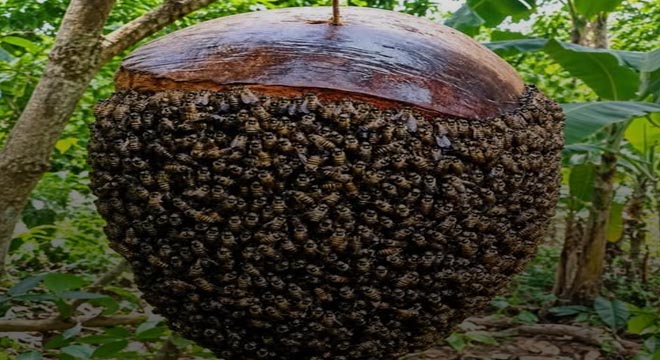
A single bee looks like nothing more than a small insect drifting from bloom to bloom, gentle and unremarkable to the casual eye. But zoom out, and that lone forager reveals something far stranger: a hive where thousands of bodies move together like one mind, quietly making life-or-death decisions about hunger, cold, danger, and opportunity, an order so intricate that no single insect could ever grasp it whole… Continue Reading ⬇️
No individual bee understands this larger system. Yet through their coordinated behavior, the colony behaves as what scientists call a superorganism, an intelligent order that emerges only when thousands of small actions are added together.
- My Son Told Me His Wife Thought I Had Become a Burden—and Admitted He Agreed. Days Later, They Tried to Move Me Into Assisted Living So They Could Keep My Paid-Off House. But at Sunday Dinner, I Placed One Folded Paper Beside My Plate—and Their Entire Plan Fell Apart…

I removed a folded sheet of paper and placed it beside my dinner plate. The quiet tap it made against the table somehow […]
- Price per pack of cigarettes tax margin and increase France 2026 tobacconist tax structure

Tobacco in France has quietly crossed a line. Packs once bought without thinking now devour a day’s budget. Smokers […]
3 min read
Inside the Hive: A Living Superorganism
A beehive is often imagined as chaotic buzzing, but it functions more like a well-run city. Every task, from cleaning to feeding to defending, is handled by workers responding to the needs of the whole colony in real time.
No single bee holds a blueprint of the hive. Instead, order emerges from many individual responses happening at once, a kind of collective intelligence built entirely from simple, repeated actions.
How Worker Bees Change Roles With Age
A worker bee’s job isn’t fixed for life. Younger bees typically start with tasks close to home, such as nursing larvae and cleaning the hive.
As they grow older, their responsibilities shift toward riskier work: leaving the hive to forage for pollen and nectar. This transition marks a natural progression tied to aging, moving bees from safer indoor duties to the more exposed and physically demanding job of gathering food.
Surviving Winter Without Migration
When temperatures drop, bees don’t fly south or sleep through the season. Instead, the colony clusters tightly together, forming a living, breathing mass.
Inside that cluster, bees shiver their flight muscles to generate heat, warming the group collectively. It’s a strategy built entirely on cooperation, keeping the colony alive through cold months without any single bee having to survive alone.
Why Bees Matter Beyond the Hive
Every visit a bee makes to a flower does more than feed the colony. That contact helps plants reproduce, supporting food webs and many of the crops people depend on.
Like all living things, bees eventually tire, age, and die, their lifespans brief compared to the ecosystems they help sustain. Even so, the ripple effects of their daily work extend well beyond the hive, quietly shaping the world around them.
Much of what makes bees remarkable isn’t found in a single dramatic moment, but in the steady, repeated choices of thousands of individuals. Understanding that pattern is what turns a simple insect into something closer to a small, cooperative marvel.