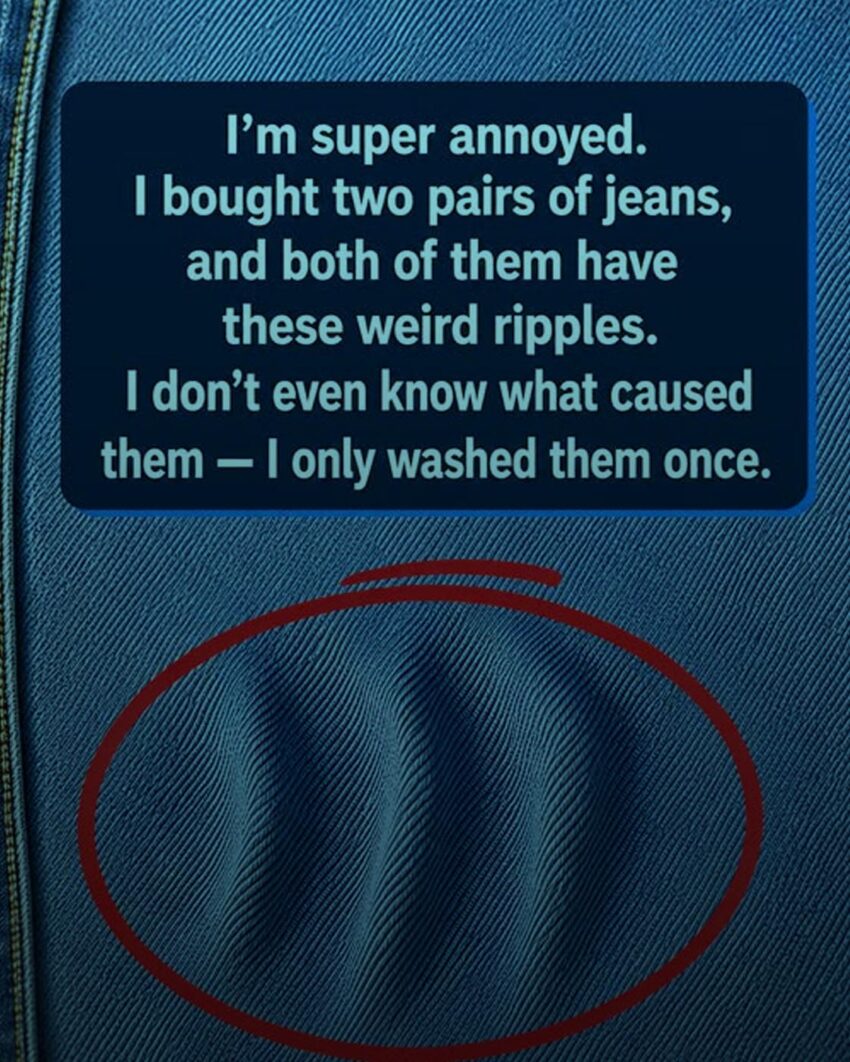
Jeans can sometimes look completely normal before washing and then come out of the laundry with strange ripples, puckering, or wavy lines in the fabric. These changes are often most noticeable around the side seams, thighs, knees, pockets, waistband, or areas where several layers of denim are stitched together. In many cases, the jeans are not ruined at all. Denim reacts to water, heat, mechanical movement, and drying pressure, and those forces can temporarily or permanently change the way the fabric sits.
Cotton fibers can contract after becoming wet, while seams and reinforced areas may respond differently because they contain extra layers of material. Understanding how denim behaves during washing makes it easier to prevent these ripples and sometimes reduce ones that have already appeared. One of the most common reasons jeans develop uneven ripples is shrinkage. Traditional denim is often made primarily or entirely from cotton, and cotton can shrink when it is exposed to water and heat.
- Why Do Jeans Develop Strange Ripples After Washing? Here’s What Could Be Happening.
Jeans can sometimes look completely normal before washing and then come out of the laundry with strange ripples, […]
- The Road They Never Left

The search is over, but nothing feels finished. A missing couple is found, and an entire community is left holding its […]
The amount of shrinkage depends on how the fabric was manufactured, whether it was pre-shrunk, how the garment was washed, and how much heat was used during drying. A pair of jeans may not shrink perfectly evenly because different sections contain different amounts of fabric and stitching. Thick seams, hems, belt loops, pockets, and reinforced panels can react differently from the flatter areas of denim. When one part contracts more than another, the surrounding fabric can begin to pucker or develop wavy lines.
Hot water can increase the chance of noticeable shrinkage in cotton denim. Heat encourages cotton fibers to relax and then tighten differently as the fabric dries, particularly if the jeans have not already been stabilized during manufacturing. Washing jeans in very hot water can therefore change their dimensions more than washing them in cool or cold water. This does not mean every pair will shrink dramatically, because modern denim treatments vary widely. Some jeans are specifically processed to reduce shrinkage before they are sold. Even so, cooler washing temperatures are generally gentler on the fabric and can help preserve the original shape.
Dryer heat can have an even stronger effect than washing temperature. When damp jeans are placed in a hot tumble dryer, the combination of heat and constant movement can encourage further shrinkage. High heat can also set folds or distortions that developed while the jeans were twisting in the machine. If the denim contains stretch fibers, excessive heat may affect those fibers differently from the surrounding cotton. The result can be a fabric surface that no longer lies as smoothly as it did before washing. Using lower heat or allowing jeans to air dry can reduce this type of stress.
Seams are especially important when trying to understand why ripples appear. A typical pair of jeans contains numerous stitched areas where several fabric layers are joined together. These stitched sections are thicker and less flexible than a single layer of denim. During washing and drying, the main fabric may shrink slightly while the thread, seam allowance, and reinforced layers respond differently. That difference creates tension along the seam. The tension can pull the surrounding fabric inward and produce puckering that looks like a series of small waves.
Manufacturing tension can also influence what happens after the first few washes. During cutting and sewing, fabric is held, stretched, and guided through industrial sewing machines. If one layer is fed through the machine at a slightly different rate from another, some tension can remain trapped in the garment. A new pair of jeans may still appear perfectly smooth because the fabric has not yet been exposed to water. Once washed, the fibers relax and settle into a more natural position. Any imbalance created during sewing can then become visible as twisting, pulling, or rippling.
This effect is sometimes called seam puckering, and it can occur in many types of clothing, not only jeans. It may be influenced by thread tension, stitch density, fabric construction, shrinkage differences, and the way the garment was assembled. A small amount of puckering does not necessarily indicate that the garment is defective. Denim is a relatively heavy fabric, and its thickness can make minor construction differences more visible after laundering. Some jeans may develop a slightly textured appearance along seams while remaining perfectly wearable. More severe distortion, however, can sometimes be related to construction quality.
Stretch denim behaves somewhat differently from rigid cotton denim. Many modern jeans contain a small percentage of elastane, spandex, or another elastic fiber to improve comfort and flexibility. These fibers allow the fabric to stretch and recover when a person moves. Cotton and elastane do not respond to heat and moisture in exactly the same way. Over repeated wash and dry cycles, differences between the fibers can sometimes contribute to uneven texture. Excessive dryer heat may also shorten the useful life of elastic fibers and reduce their ability to recover their original shape.
Stretch jeans are particularly sensitive to high temperatures because elastane is a synthetic fiber designed to provide elasticity. Repeated exposure to excessive heat can gradually reduce that elasticity. When this happens, some areas may become looser while others remain tighter. The surface can then look slightly wavy or uneven, especially around high-stress areas such as the knees, thighs, seat, and waistband. This does not always happen quickly, and the exact response depends on the composition and quality of the fabric. Still, gentle washing and lower drying temperatures are generally safer for stretch denim.
Leg twist has been known in denim manufacturing for many years and is not necessarily a sign that something went wrong during laundering. Some raw or minimally processed denim can show more movement after washing because the fabric has not been heavily stabilized. In certain vintage-style jeans, a small amount of twisting is even considered part of the character of the garment. In ordinary everyday jeans, however, severe twisting may be undesirable. Washing gently and reshaping the jeans before drying can help reduce how noticeable the effect becomes.
The way the washing machine is loaded can also contribute to rippling. Denim is heavy when wet, and jeans need enough space in the drum to move without being tightly compressed. If a washing machine is overloaded, garments can become trapped against one another and may twist into tight bundles. Jeans can wrap around towels, sweatshirts, sheets, or other heavy items during the wash cycle. This uneven movement may leave them deeply creased or pulled out of shape. A less crowded load generally allows water and detergent to circulate more evenly around the fabric.
Very aggressive washing cycles can also create unnecessary stress. Strong agitation and high-speed spinning may be useful for heavily soiled items, but they are not always necessary for normal denim care. A gentler cycle reduces the amount of mechanical twisting and friction applied to the jeans. Less friction can also help preserve the surface color of dark denim. Turning jeans inside out before washing provides another layer of protection for the outer surface. It can reduce direct rubbing against the washing machine drum and other garments.
Detergent can influence the appearance of washed denim as well, although it is usually not the main cause of ripples. Using far more detergent than necessary can make rinsing more difficult and may leave residue in the fabric. Residue can make denim feel stiff, particularly if the water in the home contains a high concentration of minerals. Stiff fabric can hold wrinkles and puckers more noticeably after drying. Using the appropriate amount of detergent for the load size and water conditions can help avoid this problem. Following the detergent manufacturer’s instructions is generally more effective than adding extra product.
Fabric softener is another consideration. Some people use it because they prefer softer-feeling jeans, but it is not always ideal for stretch denim. Certain softening products can leave coatings on fibers, and repeated use may affect the way some performance or elastic fabrics behave. Whether that becomes noticeable depends on the specific product and garment. It is usually best to follow the care label provided by the jeans manufacturer. The label is designed for the particular fabric blend used in that garment.
Drying technique has a major influence on the final appearance of denim. Jeans that remain twisted when they enter a dryer may dry in that shape. Before drying, it can help to remove the jeans from the washer promptly and gently shake them out. Straightening the legs, smoothing the seams, and aligning the waistband can reduce large folds. These simple steps allow the fabric to begin drying in a more natural position. They are especially useful when air drying.
Air drying is one of the gentlest ways to preserve denim. Jeans can be hung from the waistband or laid flat, depending on available space and the manufacturer’s care instructions. When hanging them, it helps to make sure the legs are straight and not folded over one another. When laying them flat, smoothing the fabric with the hands can reduce puckering. Air drying takes longer than machine drying, but it avoids the high temperatures that contribute to shrinkage and fiber stress. It may also help preserve dark dyes for a longer period.
If a dryer is necessary, a low-temperature setting is generally safer than high heat. Removing the jeans while they are still slightly damp can also help. The remaining moisture allows the fabric to relax as it finishes drying naturally. Once removed, the jeans can be reshaped by hand and placed on a hanger or flat surface. This approach reduces the amount of time the garment spends exposed to dryer heat. It can also prevent overdrying, which sometimes makes denim feel unnecessarily stiff.
Overdrying does not usually destroy denim immediately, but repeated exposure can gradually affect the fabric. Cotton can become rougher, and stretch fibers can lose resilience over time. The jeans may also develop more permanent creases if they remain compressed while extremely dry and hot. Dryers are convenient, but they do not need to be used at maximum temperature for every load. Lower heat combined with a shorter cycle is often sufficient. Checking the garment before the cycle finishes can prevent unnecessary exposure.
Some ripples are temporary and disappear after the jeans are worn. Body heat and movement can help cotton fibers relax, particularly if the distortion was caused by simple wrinkling rather than permanent shrinkage. Wearing the jeans for a short period may allow mild puckering to flatten naturally. This is more likely with softer denim than with very stiff fabric. If the ripples remain unchanged after wearing, additional reshaping may be necessary. Persistent ripples may be related to construction or uneven shrinkage rather than ordinary wrinkles.
Steam can sometimes help relax minor puckering. A garment steamer provides moisture and gentle heat that can loosen cotton fibers without the intense pressure of a dryer. The jeans should be placed on a stable hanger, and the fabric can be smoothed carefully while steaming. It is important to follow the steamer manufacturer’s safety instructions and avoid holding concentrated heat too close to stretch fabrics. Steam works best on ordinary wrinkles and minor seam puckering. It cannot always reverse structural distortion caused by major shrinkage.
An iron can also be useful if the care label allows ironing. Turning the jeans inside out can reduce the chance of creating shiny marks on dark denim. A moderate temperature appropriate for the fabric should be used rather than automatically selecting the highest setting. A little steam can help flatten the areas around seams. Moving the iron continuously prevents too much heat from concentrating on one location. Stretch denim may require a lower temperature than rigid cotton denim.
If the jeans have developed severe rippling after only one wash, it can be useful to inspect the care label and consider how they were washed. If the label called for cold washing and low-temperature drying but the jeans were exposed to high heat, shrinkage may explain part of the change. If the recommended instructions were followed closely and the distortion is extreme, construction may be contributing to the problem. Retailers and manufacturers have different policies regarding garment defects. Keeping the receipt may be helpful when a newly purchased garment changes dramatically after correct laundering. Normal wrinkles, however, are generally not considered a defect.
Not every pair of jeans should be washed in exactly the same way. Rigid denim, raw denim, stretch denim, coated denim, and heavily treated fashion denim can have different care requirements. Raw denim in particular may shrink significantly depending on how it was produced. Some enthusiasts deliberately delay washing raw denim to develop particular fading patterns, although that is a style preference rather than a requirement for ordinary hygiene. Stretch jeans are usually more sensitive to heat because of their elastic fibers. Always checking the label is therefore more reliable than applying one washing method to every pair.
Color can also be affected by washing practices. Dark indigo denim may lose dye over time, particularly with warm water and strong agitation. Turning jeans inside out and using cooler water can help reduce visible fading. Washing only when necessary can also limit unnecessary wear on the fabric. This does not mean jeans should never be washed, because they still need cleaning when they become dirty, sweaty, or develop odors. The goal is simply to avoid washing more aggressively than necessary. Gentle care can preserve both the color and structure of the garment.
Separating jeans from certain laundry items can also help maintain their shape. Heavy towels and bulky sweatshirts absorb large amounts of water and can place additional strain on jeans during spinning. Lightweight garments may become trapped inside the legs of jeans and cause uneven twisting. Washing denim with similarly weighted items can create a more balanced load. The washing machine should still have enough empty space for clothing to move. Following the washer manufacturer’s load recommendations is important for both clothing care and machine performance.
The age of the jeans also matters. Older denim has already experienced many cycles of stretching, washing, drying, and friction. Fibers gradually weaken with use, particularly at the knees, thighs, pockets, and crotch. Older stretch denim may show more rippling because its elastic fibers have lost some ability to recover. This type of wear is normal and does not necessarily mean the jeans were washed incorrectly. Clothing materials naturally change as they age.
Body movement can create another type of ripple that becomes more visible after washing. Jeans repeatedly bend at the knees, hips, and thighs while being worn. These areas are stretched and compressed hundreds of times during ordinary movement. Washing may temporarily make these existing stress patterns more noticeable because the fabric becomes stiff as it dries. After being worn again, the denim may gradually conform to the body and the ripples may soften. This is another reason not to assume that every post-wash wave represents permanent damage.
Storage can make a difference too. Folding slightly damp jeans into a drawer can create strong creases that become difficult to remove. Jeans should generally be completely dry before being stored. Hanging them by the waistband can help preserve a smooth shape, although folding is also acceptable when the fabric is dry and arranged neatly. Avoid placing heavy objects on top of folded damp denim. Pressure combined with moisture can set wrinkles into the fabric.
When trying to fix existing ripples, it is best to start with the least aggressive method. Lightly dampening the affected area and reshaping it by hand is often a good first step. The jeans can then be allowed to air dry while lying flat or hanging straight. If the problem remains, gentle steam may help. Ironing can be considered next if the care label permits it. Repeatedly exposing the jeans to very hot water or high dryer heat in an attempt to remove ripples can actually make the problem worse.
It is also important to distinguish ordinary fabric ripples from damaged elastic fibers. Normal wrinkles usually change when the garment is dampened, steamed, or worn. Damaged stretch fibers may create persistent waves that return even after smoothing. In severe cases, the fabric may appear stretched or loose in localized areas. There is no simple home treatment that can fully rebuild damaged elastane once it has lost its elasticity. Preventing excessive heat exposure is therefore more effective than trying to repair the fibers afterward.
Another potential cause of visible lines is the way denim finishes are applied during manufacturing. Many jeans are washed, softened, faded, whiskered, or otherwise treated before being sold. These processes create the appearance and texture consumers expect from modern denim. Different sections of fabric may respond slightly differently to later home washing because they have already undergone different levels of processing. This can contribute to variations in texture. Again, a small amount of variation is normal in denim.
Sanforization is one manufacturing process commonly used to reduce future shrinkage in cotton fabric. Sanforized denim has been mechanically treated so that much of its potential shrinkage occurs before the garment reaches the consumer. This does not necessarily eliminate all shrinkage, but it can make dimensional changes less dramatic. Unsanforized denim may shrink more noticeably during its first exposure to water. Consumers purchasing raw or specialty denim sometimes receive specific instructions because of this difference. Following those instructions is particularly important.
The safest general washing routine for many everyday jeans is fairly simple. Turn the jeans inside out, fasten buttons or zippers, and place them in a moderately sized load. Wash in cool or cold water using a gentle or normal cycle suitable for the garment. Use an appropriate amount of mild detergent and avoid excessive agitation. After washing, remove the jeans promptly and shake them out. Smooth the seams and legs before drying.
For drying, air drying is generally the gentlest option. Hang the jeans straight or lay them flat in a well-ventilated area away from excessive direct heat. If a tumble dryer is preferred, choose low heat and remove the jeans before they become extremely dry. Reshape them by hand and allow them to finish drying naturally if necessary. These steps can reduce shrinkage, protect stretch fibers, and limit puckering. They can also extend the useful life of the garment.
People sometimes assume that ripples automatically mean a pair of jeans is poor quality, but that conclusion is too simple. High-quality denim can still wrinkle, shrink slightly, or show seam puckering after laundering. Fabric composition, construction, finishing, wash temperature, dryer heat, and individual care practices all affect the result. Conversely, inexpensive jeans can sometimes maintain their shape very well. Price alone does not determine exactly how denim will behave after washing. The best indicator is how the specific garment responds when cared for according to its instructions.
Ripples that appear mainly next to seams are usually easier to understand than random severe distortion. Seam-related waves often come from different shrinkage or tension between stitched and unstitched areas. Large diagonal folds or dramatically twisted legs may indicate broader fabric movement. Persistent loose waves in stretch denim can suggest aging or damage to elastic fibers. Identifying where the ripples appear helps narrow down the likely cause. It also helps determine whether simple steaming or reshaping is likely to work.
Jeans are designed to be durable, but durability does not mean they are unaffected by heat and repeated washing. Cotton fibers gradually change with use, while elastane and other synthetic fibers have their own limitations. The gentler the laundering process, the less unnecessary stress the garment experiences. That does not require complicated care routines. Cooler water, moderate loads, low heat, and proper drying are often enough to make a significant difference. These habits can also reduce fading and general wear.
If a favorite pair develops a few waves after washing, there is usually no reason to panic. Allow the jeans to cool and dry completely before judging the final result. Smooth them by hand and try them on, because some minor ripples may relax during wear. If necessary, use gentle steam or an appropriate iron setting. Avoid immediately rewashing and drying them on high heat. Giving the fabric time to relax is often surprisingly effective.
Ultimately, strange ripples in jeans are usually caused by ordinary interactions between fabric, stitching, water, heat, tension, and movement. Cotton can shrink, seams can pucker, twill fabric can twist, and stretch fibers can respond differently from natural fibers. An overloaded washer or excessively hot dryer can make these effects more noticeable. None of these possibilities automatically means the jeans are ruined. In many cases, the appearance improves with proper reshaping and gentler care.
The best way to prevent the problem is to treat denim with moderate rather than extreme conditions. Follow the garment care label, wash with cool water when appropriate, turn jeans inside out, avoid overloading the washer, and limit unnecessary high-temperature drying. Straighten the garment before it dries and allow the fabric to retain its natural shape. These simple habits can reduce puckering, fading, twisting, and premature wear. With consistent care, a good pair of jeans can remain comfortable, attractive, and functional for a long time.