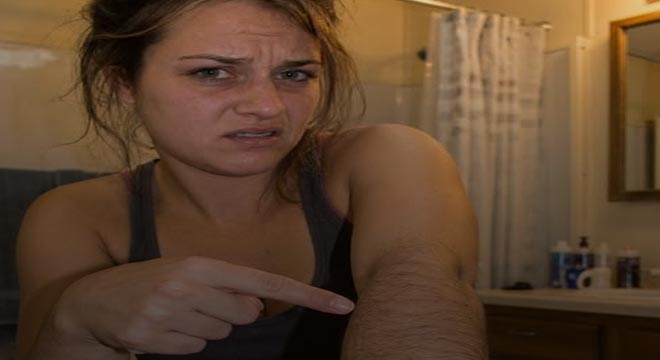
“Mom, do normal girls have hair on their arms?” My fourteen-year-old daughter, Emma, sat on the edge of our bathtub with my pink disposable razor in one hand and a can of shaving cream beside her bare foot. It was a Friday evening in October, and the bathroom light caught the tears on her cheeks as she tried to hide the razor behind her back. When I sat down opposite her, she explained that her boyfriend, Tyler, had told her the dark hair on her forearms made her look like a boy and embarrassed him whenever they held hands at school. His friends had begun calling her “Man Arms” in the hallway, and Tyler had suggested that shaving would solve the problem. Emma looked at the razor again and whispered that she didn’t want to change her arms, but she was terrified Tyler would break up with her if she refused. I took the razor gently from her hand, struggling to find an answer that wouldn’t make her feel even more ashamed. Two nights later, my husband would invite Tyler to dinner, calmly describe a mistake he’d made as a teenager, and uncover something about the boy’s home life that none of us had imagined. By the time the apple crisp was served, four people at our dining room table would be questioning beliefs they’d carried for years.
My name is Julie Hallett, and I’m forty-three years old. I work as a dental hygienist in a small town outside Grand Rapids, Michigan, and my husband, Rob, teaches chemistry at a public high school across town. He’s forty-five, coaches the girls’ junior-varsity soccer team, and is one of those quiet men who rarely raises his voice because he doesn’t need to. In the winter, he grows a thick dark beard, and in the spring he shaves it off, announcing the event as though the whole household should celebrate. We’ve been married nineteen years and have one daughter, Emma, who attends St. Mary’s, a Catholic high school on the north side of town. She runs cross-country, plays cello in the school orchestra, reads enormous fantasy novels, and has always been more comfortable making one close friend than joining a crowd. Tyler Brandt was her first boyfriend. He was fifteen, a sophomore on the cross-country team, and they’d been dating for about two months. Until that Friday, Rob and I genuinely liked him. He was polite, shook hands when introduced, called us Mr. and Mrs. Hallett, and once helped Rob unload groceries in the rain without being asked. Emma came home from practice smiling whenever she’d spent time with him. She began wearing a little lip gloss and checking her phone more often than usual, and I recognized the excitement of a first relationship. I also remembered how uncertain those years could be, when a careless remark from someone you liked might carry more weight than a dozen reassuring words from your parents. Tyler’s remarks had begun on Wednesday at lunch. He’d been holding Emma’s hand when he noticed the dark, fine hair on her forearms. He laughed and said they looked like a man’s arms. The following day, he repeated the comment, explaining that his friends Brandon and Kyle were teasing him for dating a girl with so much body hair. Brandon then used the nickname “Man Arms” in the hallway loudly enough for other students to hear. Tyler told Emma that all normal girls shaved their arms and claimed his own mother did it. He presented the suggestion as helpful advice, insisting that if Emma shaved, the teasing would stop. By Friday evening, she’d spent twenty minutes sitting on our bathtub trying to decide whether to obey him. She hadn’t used the razor. Instead, she’d cried quietly, wondering why something she’d never noticed about herself suddenly seemed unacceptable. I told her that arm hair varied from person to person and that hers was entirely normal. She listened, but I could see the reassurance wasn’t reaching the place where Tyler’s words had lodged. When I offered to contact his mother or speak to the school about the harassment, Emma begged me not to. She was afraid other students would learn she’d complained and that Tyler would end the relationship. I respected her fear without pretending the bullying was harmless, and I told her we could revisit the question of involving school staff if it continued. After she went to bed, I told Rob what had happened. He listened silently, his expression serious. I expected anger, and I had plenty of my own. I wanted to insist that Emma stop seeing Tyler immediately. Rob asked me to consider whether ordering her to end the relationship might teach her another lesson in letting someone else control her choices. He wasn’t defending Tyler. He simply believed Emma needed help recognizing what respectful treatment looked like so she could make decisions with confidence. He went upstairs and sat beside her bed, asking whether she’d ever considered shaving her arms before Tyler mentioned them. She said she hadn’t. He asked whether the hair interfered with running, playing cello, reading, or holding the people she loved. She gave a small laugh and said no. Then Rob told her that her body belonged to her. If she someday chose to remove hair because she liked the feeling, that would be her decision. But she didn’t owe anyone a change to her appearance in exchange for affection or social acceptance. He also told her she could decide what to do about Tyler, while reminding her that a good relationship shouldn’t leave her frightened of being seen as she was. I stood in the hallway listening, proud of the gentleness in his voice. Yet I felt increasingly uncomfortable because Emma wasn’t the only person in our household who’d learned to be ashamed of ordinary body hair. When I was thirteen, my mother had caught me examining my forearms in the bathroom mirror. She’d looked at the dark hair and said we’d have to do something about it, then demonstrated how to shave it away. I followed that routine for the next thirty years. I shaved my arms every other day, waxed my upper lip, and sometimes wore long sleeves in summer if I’d missed a session. I’d declined swimming invitations because I worried about being seen before I’d shaved. I once calculated that I’d spent thousands of dollars and countless hours managing hair I’d never disliked until someone else pointed it out. Rob knew I shaved my arms, but he didn’t understand how deeply the habit was connected to shame. Early in our marriage, he’d asked why I bothered, saying he liked my arms as they were. I’d laughed and told him it was something women did. He hadn’t pressed me. Emma had watched me standing at the sink with my sleeves pushed up for most of her childhood. That Friday, holding the razor she’d borrowed, I wondered whether she’d absorbed more from those mornings than I’d realized. On Saturday, Rob told me he’d asked Emma if she would be comfortable having Tyler over for Sunday dinner. She’d agreed because she trusted him and wanted to see what he thought of the boy. Rob promised he wouldn’t humiliate Tyler or announce Emma’s private concerns in front of him without her permission. He said he’d simply ask questions and listen. I was relieved, although I knew my husband well enough to suspect he’d thought carefully about what he wanted to say. That night, while Rob slept, I stood in our bathroom looking at my freshly shaved arms. At forty-three, I had a few gray hairs near my temples and the beginnings of laugh lines around my eyes. I could accept those changes. Yet I couldn’t remember what my own forearms had looked like before my mother taught me to shave them. On Sunday afternoon, I prepared pot roast with carrots, onions, and potatoes, along with salad, bakery rolls, and apple crisp. Tyler arrived just before six carrying a clear plastic container of chocolate-chip cookies from Meijer. He wore khakis and a button-down shirt slightly too big for him, and he’d combed his sandy hair flat with water. His mother, Kristin, waited in a silver minivan at the curb and waved through the windshield. As Tyler stepped inside, Emma came downstairs wearing a short-sleeved blue T-shirt with a tiny cello embroidered on the pocket. Her forearms were bare, with their natural dark hair visible. I hadn’t known she’d planned to wear it. Tyler noticed her arms for a moment, then quickly looked away. I felt the room tighten around that glance. Rob simply welcomed him, asked whether he liked pot roast, and led everyone to the table.
- My Husband Abandoned Me with Newborn Triplets – Years Later I Accidentally Met Him Again
When Allison’s husband vanishes just days after she gives birth to triplets, she’s forced to rebuild her life from […]
- The Woman Everyone Ignored…

On a quiet neighborhood street, an elderly woman sat alone on the curb almost every day while most people passed her […]
The first twenty minutes passed like an ordinary family dinner. Rob asked Tyler about cross-country, and Tyler said he was trying to improve his five-kilometer time from nineteen minutes and fifty seconds to under nineteen thirty. They talked about biology, his dislike of English class, and whether he might study engineering or physical therapy after high school. Emma said little, moving her arms between her lap and the tabletop while I tried not to watch every gesture. Then Rob asked Tyler about his family. Tyler explained that he was an only child, his mother worked as a receptionist at a car dealership, and his father sold insurance. Asked what his parents were like, Tyler described his mother as kind and hardworking, someone who handled most of the cooking and cleaning. His father worked long hours, watched football, and had firm opinions about how people should behave. Rob didn’t challenge him. He took a sip of water and asked permission to tell a story about something he’d done when he was fifteen. I had never heard the story before. Rob explained that his first girlfriend had been a girl named Mandy Prescott, a redhead who played the flute and had freckles across her face, arms, and shoulders. He’d liked her enormously, but two boys in his group of friends called her cruel nicknames and sometimes barked at her in the hallway. Instead of defending her, he’d laughed along because he was afraid the boys would turn their attention toward him. One afternoon, when Mandy was sitting beside him in the cafeteria, one of those friends mocked her loudly. Rob felt embarrassed, looked down at the freckles on her hand, and told her there were creams that might make them fade. He remembered believing he was helping her escape the teasing. Mandy went home and asked her mother to buy a skin-lightening product. She used it repeatedly, developed irritation, and eventually needed medical treatment. More damaging than the physical reaction was the shame. She began covering her arms, avoiding the swimming pool, and withdrawing from activities that once brought her joy. A few months later, she ended the relationship. Rob admitted that he’d understood very little about the damage he’d caused until a high school reunion twenty years later, when he saw Mandy wearing a sleeveless dress and looking happy with her husband. He apologized for how he’d treated her. She accepted the apology but told him the worst part hadn’t been the classmates making fun of her. It had been hearing the boy who was supposed to like her suggest that something about her body needed fixing. Because she’d trusted him, she’d believed him. She told Rob it had taken years to stop hating her freckles and that counseling had helped her understand they were never the problem. Rob finished the story with his eyes lowered. Across the table, Tyler had gone very still. He asked why Rob was telling him this. My husband said he believed Tyler had many good qualities, but that even a decent young person could hurt someone badly by repeating a cruel judgment without considering its effect. He wanted Tyler to understand the difference between helping a girlfriend and asking her to change herself so other boys would stop laughing. Then Rob asked a simple question: where had Tyler learned that girls were supposed to shave their arms? Tyler stared at his plate. For a moment, I thought he might become defensive or insist Rob had misunderstood him. Instead, tears began running down his face. He admitted that his father routinely commented on his mother’s appearance. At dinner, he joked about her arms, her weight, the lines around her eyes, and whether she’d made enough effort to look attractive. Kristin usually laughed along, then disappeared into the bathroom afterward. Tyler had grown up hearing those remarks and had assumed they were an ordinary part of marriage. His mother shaved her arms every day because his father expected it. Tyler said he’d repeated the same advice to Emma without realizing how cruel it sounded. He’d convinced himself that he was protecting her from his friends, just as his father claimed to be helping Kristin. I felt a cold sadness settle over me. A boy who’d been perfectly courteous to adults had learned to repeat the humiliating behavior he’d witnessed at home, while a girl who trusted him had almost changed her body to keep his approval. Emma moved beside Tyler and rested a hand on his shoulder. Rather than immediately comforting him or excusing the remark, she asked whether his mother was all right. Tyler wiped his eyes and admitted he wasn’t sure she was. I thought of Kristin waiting in the car outside, wearing long sleeves on a mild October evening. I went to the front door and walked down the driveway to the minivan. She looked alarmed when I approached and asked whether Tyler had done something wrong. I assured her he was safe and invited her inside for dinner and dessert. She hesitated, saying her husband expected her home soon and didn’t like her being out late. It was only quarter to seven. After a moment, she agreed to come in for a few minutes. Rob welcomed her and brought another chair to the table. Kristin immediately noticed Tyler’s red eyes and asked what had happened. He told her, in a halting voice, about his comments to Emma and the teasing at school. Then he said he’d used the same words his father used when talking about Kristin’s body. His mother covered her mouth. Tyler told her he’d thought those remarks were normal because she always laughed when his father made them. Kristin began crying. She said she’d laughed because she hadn’t known how to challenge him and because she’d gradually come to believe his criticisms herself. Then she unbuttoned the cuffs of her cardigan and pushed up her sleeves. Her forearms were smooth but irritated, with small red bumps and healing nicks. She explained that she’d started shaving on her honeymoon twenty-one years earlier after Doug mocked her body hair at the hotel pool. She’d used his razor that night and had continued shaving almost every day since. She’d never considered stopping, even when the routine made her skin sore. Emma looked at Kristin’s arms, then held out her own. She said her father had told her that nobody else could decide what she did with them. Kristin stared at my daughter’s forearms, then began crying again. We sat together for a long time as she described a marriage in which comments about her body had become routine. Doug had never struck her, she said, and she’d spent years telling herself that his remarks were simply jokes. Yet she felt monitored and diminished by them, and she had changed her appearance repeatedly to avoid his criticism. Rob listened without interrupting. I didn’t try to tell Kristin what she should do about her marriage. She needed room to decide that safely for herself, and I knew that arguments about appearance could be part of a broader pattern of emotional abuse or coercive control even when no physical violence occurred. I offered to help her find confidential professional support if she wanted it. Tyler sat beside her holding her hand. At one point he told her she was beautiful and that he didn’t believe his father’s comments were fair. She hugged him, but she also explained that she wanted him to understand a woman’s value didn’t depend on whether someone found her attractive. When the conversation grew quieter, I brought out the apple crisp and vanilla ice cream. Kristin accepted a cookie from the plate Tyler had brought and said she hadn’t eaten a dessert in front of other people for years because Doug commented on her weight. Then I told her my own story: my mother’s remark in the bathroom when I was thirteen, the decades of shaving, and the embarrassment I’d carried into middle age. Rob looked at me with surprise, realizing he hadn’t known the full extent of it. Emma asked whether I’d ever actually wanted to shave my arms. I thought about the question for a long moment before admitting I couldn’t remember making that choice for myself. It had simply become something I did because my mother taught me that I should. Emma looked down at her arms, then back at me. I realized the evening had begun as an attempt to help her recognize an unhealthy expectation from a boyfriend, but it had exposed how many adults around her had accepted similar expectations without question. Rob had invited Tyler to dinner hoping one boy would understand the harm in a careless remark, but the conversation revealed that the same kind of shame had traveled through several households for decades—and that our daughter might be the first person willing to refuse it.