I was eight when I arrived at their house.
They called it a “placement.” I called it another beginning I didn’t get to choose.
- Part 2: “He’s Bit Three Volunteers. Nobody Goes In That Kennel.” I Opened the Door Anyway — and the Dog Wasn’t Guarding Rage.
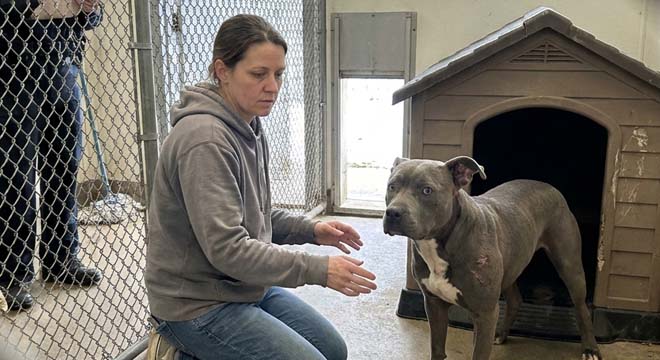
When I moved closer to the doghouse, Bishop did not bite.He pressed his body sideways against the opening and trembled […]
- I planned everything — even my dad’s favorite dessert. My parents texted:
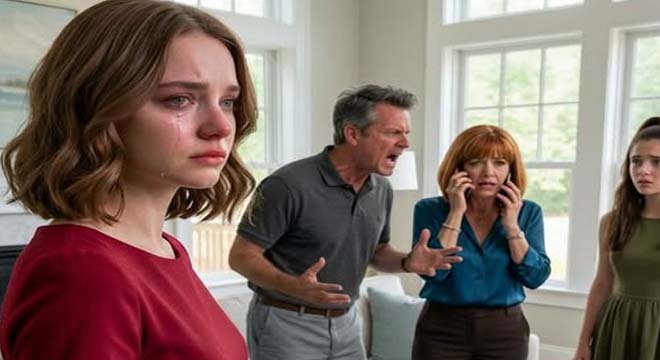
By the time my mother’s message came through, everything had already been handled with the kind of precision I’d […]
Their house looked ordinary from the outside. It had two stories, a neatly trimmed lawn, and a ceramic angel by the mailbox.
The kind of home that made social workers nod approvingly before they even stepped inside.
Mrs. Harlow hugged me the first day. Tight enough to look convincingly happy.
“We are so delighted to have you,” she said, smiling at the caseworker over my shoulder.
Mr. Harlow shook my hand like I was an employee starting a job.
“You’ll follow our rules, and we’ll get along just fine.”
Their daughter, Paige, stood behind them in clean white socks, staring at me like I was something her parents had brought home from a yard sale.
When the caseworker left, the performance ended.
Mrs. Harlow crouched in front of me and said quietly, “You need to understand something. We are doing you a favor. Don’t make us regret it.”
I nodded.
I learned quickly that there are houses that look warm and houses that feel warm.
This one only looked the part.
Paige had a pink bedroom with string lights and framed posters. She had a desk for homework and shelves full of books. She had privacy.
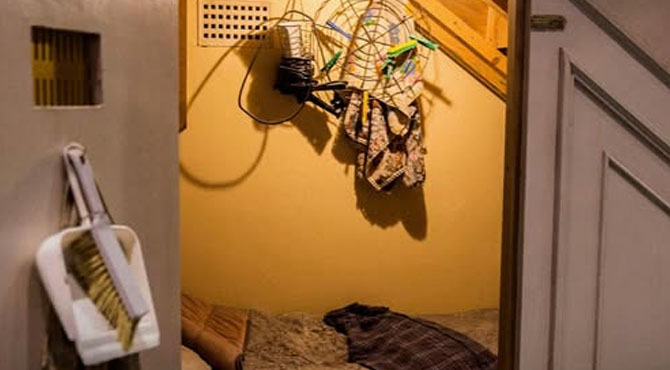
I had a mattress under the stairs.
It was not technically a closet, they would say if anyone asked. It was a “storage nook.” They cleared out a few boxes and laid down a twin mattress on the floor. The shelves above my head still held winter coats and plastic bins of holiday decorations.
There was no window and no door that locked.
Just a thin folding panel they could slide closed when they wanted me quiet.
“If Harry Potter could live under the stairs, you can too,” Paige once said, laughing.
I did not know who Harry Potter was at the time. I only knew that fiction did not make my darkness smaller.
If I cried at night, Mrs. Harlow would pull the panel open and hiss, “You are lucky to even be here.”
If I asked for a nightlight, Mr. Harlow said, “Do you know how many kids would beg for this opportunity?”
Opportunity. That was the word they liked.
I learned to sleep still, breathe quietly, and pretend the creaks of the house were not footsteps coming to remind me of my place.
At school, I smiled in photographs.
I said my room was “small but cozy.” I told teachers I liked quiet spaces. I became good at gratitude as a performance.
Social workers visited once or twice a year. The night before inspections, Paige would sigh dramatically and say, “Guess I’m bunking with you tonight.”
For those visits, I was temporarily moved to her floor, a sleeping bag placed near her bed to suggest shared sisterhood.
My mattress under the stairs disappeared, folded and hidden behind boxes.
“Do you like sharing a room with Paige?” the caseworker would ask.
“Yes. It’s nice,” I would say.
Mrs. Harlow would beam.
After they left, the mattress returned to its place under the staircase like evidence put back into hiding.
The checks arrived every month. I knew because Mrs. Harlow would mention it.
“Food is expensive,” she’d mutter when I reached for a second piece of bread.
“Clothes aren’t free,” Mr. Harlow would say when I asked for shoes without holes.
Paige got new dresses for every school dance. I got her old ones, hemmed and tightened.
They reminded me constantly that without them, I would have nothing.
And when you are a child who has already lost everything once, that sentence carries weight.
I stopped speaking up and learned invisibility. When they began fostering more children, backed by reports that reflected well on them, I felt the weight of my silence.
The new kids were treated no differently. A few ran away. The rest learned to endure.
On my 18th birthday, there was no cake or card.
Mr. Harlow handed me a small envelope with my identification documents.
“You’re legally an adult now,” he said. “Time to make your own way.”
Mrs. Harlow added, “We’ve done our part.”
I packed my few belongings into one backpack. A pair of jeans and two shirts. A worn paperback from school. A photo of myself at twelve that I kept hidden between textbooks.
I did not hug them goodbye, and I did not look back.
The first night alone in a rented room above a mechanic’s shop, I lay on the mattress and stared at the ceiling fan turning slowly. There were noises from the street, laughter from a bar nearby, and the hum of traffic.
But there was space, and I could breathe.
Two years later, I turned 20 and was doing much better in life.
I work as a cashier in a clothing store at the mall.
The pay is not impressive, but it is steady. I have my own apartment now. Clean, fresh, and with a window that lets in afternoon light.
On my birthdays, I buy myself a cupcake and light a candle.
This morning, I woke up, stretched, and made coffee in the tiny kitchen I paid for with my own name on the lease.
I was tying my shoes when the knock came. Firm and repeated.
I opened the door and froze.
Mr. and Mrs. Harlow were in the hallway, Paige behind them.
All three were on their knees.
“Please forgive us!” Mrs. Harlow sobbed, hands clasped together.
Mr. Harlow’s face was red and blotchy. “We made mistakes, but we did the best we could.”
Paige avoided my eyes.
For a second, my brain refused to connect the image in front of me with the people who used to slide a panel shut over my head.
“What are you doing here?” I asked, my voice steady in a way that surprised me.
“We need you,” Mrs. Harlow cried. “Please don’t turn your back on us.”
My phone rang in my pocket.
The sound cut through the hallway like a blade.
I glanced at the screen. Unknown number.
“Hello?” I answered.
A woman’s voice came through, cheerful but professional. “Good morning. Are they already with you?”
I stared at the three figures kneeling on my apartment floor.
“Who is this?” I asked. “What’s going on?”
“My name is Ms. Alvarez,” she said. “I’m a social services investigator. We’ve reopened several foster care files connected to the Harlow household.”
My heart began to pound, but not with fear.
“With what reason?” I asked carefully.
“In the past month,” she continued, “we have received written statements from former foster placements describing tough living conditions. Storage areas used as bedrooms, lack of proper accommodation, and emotional intimidation.”
My gaze dropped to Mr. Harlow’s hands, trembling against the tile.
“We are reviewing archived inspection reports and payment records,” Ms. Alvarez said. “Those reports indicate that adequate bedroom space was provided during your placement.”
I almost laughed.
“They moved me to their daughter’s room during inspections,” I said quietly.
There was a pause on the line.
“That aligns with other statements,” she replied.
Mrs. Harlow shook her head frantically. “Tell her you were fine,” she whispered harshly. “Tell her you’re okay.”
“We formally instructed them not to contact previous placements,” Ms. Alvarez continued.
“They are currently at my door begging me to lie to you,” I replied.
“I know, and that’s why I called you immediately,” Ms. Alvarez added. “We have been monitoring them in case of witness interference because we received information that they were attempting to locate former children. I had planned to talk to you in person, but when I heard they were on their way to you, I had to contact you immediately.”
“So, they tracked me down?” I asked.
“Yes. You are the only former placement we have not yet spoken to,” she said. “Your testimony could establish a documented pattern, and they want to interfere with that.”
Outside my door, Mrs. Harlow was crying loudly now.
“We’ll lose everything,” she said. “Our home. Our reputation. Please.”
For the first time in my life, I did not feel small.
I stepped out into the hallway and closed the door behind me.
The three of them looked up at me like I was a judge.
“You remember the closet?” I asked quietly.
Mrs. Harlow’s crying faltered.
“The one under the stairs with no window and no lock. Just shelves and darkness.”
“We didn’t mean—” Mr. Harlow started.
“You meant it,” I said. “Every time you told me I was lucky. Every time you reminded me, I had nothing without you.”
Paige’s eyes flickered, something unsettled moving behind them.
“You walked past that closet every day,” I said, turning to her.
“I was a kid,” Paige said quickly. “I didn’t make the rules.”
“No,” I agreed. “But you never once told them it was wrong. You never once said I deserved a room with a door. You laughed about it.”
Her face flushed. “I didn’t know what to do.”
“You just had to speak out against the wrong,” I said.
Mr. Harlow’s voice hardened. “This is unnecessary. We provided for you. You had food and shelter for years. And for the little mistakes we made, we ask for forgiveness.”
“You have no right to ask me for anything,” I said calmly. “Not after reminding me for ten years that I owed you for existing.”
Silence settled between us.
“I don’t owe you protection,” I continued. “And I don’t owe you comfort. What I owe is the truth.”
The three looked at each other with worry all over their faces.
“I’ve forgiven you,” I said.
Mrs. Harlow’s shoulders sagged in relief.
“For my own peace,” I added.
Hope flickered across their faces.
“But I will testify.”
The silence that followed felt different from the one under the stairs.
I was now in control.
“You cannot foster another child,” I continued. “I won’t risk someone else sleeping in that darkness.”
Mr. Harlow’s jaw tightened. “You’re ruining us.”
“No,” I said calmly. “You did that yourselves.”
I lifted the phone back to my ear.
“Yes,” I told Ms. Alvarez. “I’m willing to submit a statement.”
Mrs. Harlow began to sob again.
I stepped back and opened my apartment door.
“You need to leave,” I said. “Ms. Alvarez is on her way, and if she contacts authorities, you will find yourselves facing more changes.”
They hesitated and then, slowly, they stood.
For the first time, they looked older than I remembered.
They walked down the hallway without another word.
Inside my apartment, I leaned against the door and let out a breath I did not know I had been holding for twelve years.
That afternoon, I sat at my small kitchen table and wrote everything.
The mattress, inspections, hunger, and verbal and emotional abuse.
I did not embellish or dramatize. The truth was enough to get me and the others the justice we deserved.
Months passed, and life continued.
I worked, saved, and planted a small fern by the window because I could.
Then my phone rang again with a call from Ms. Alvarez.
“The foster license has been permanently revoked,” she said. “They are barred from fostering again.”
I closed my eyes, grateful that no child would have a similar cruel childhood as I did under their roof.
Ms. Alvarez continued, “They have managed to avoid incarceration. However, confirmed violations resulted in administrative penalties and three years of court-ordered community service for Mr. and Mrs. Harlow.”
“Thank you,” I said.
After I hung up, I walked to my window and opened it.
The air that came in was warm.
Somewhere, a child would be placed in a different home. Somewhere, a closet under the stairs would stay empty.
And for the first time, my past did not feel like a weight dragging behind me. It felt like something I had survived.
In that moment, I also made up my mind. I had saved enough, and with a student loan, I could begin my journey to becoming a social worker.
I would do a better job than the ones who supervised my placement at Mr. and Mrs. Harlow’s house.