My name is Aaron. I am 29, and I live in a quiet corner of Indiana. For the past four years, I have been raising my son, Jack, on my own. He is curious, stubborn, kind-hearted, and my entire world. He’s the reason why I can’t falter, even when everything seems impossible.
I work mostly as a handyman around town. Gutters, fences, patchy driveways, you name it. It’s not glamorous, but it’s honest work, and it keeps us afloat.
Jack’s mom, Hannah, left when he was still in diapers. There was no dramatic fight, no teary goodbye at the door.
Just a single text: “This life isn’t for me. You’ll do better without me.”
That text still lives in the back of my mind, no matter how many times I change phones. It was like she vanished into thin air, like Jack and I were a detour she got tired of driving through.
For the longest time, I could not even look at the bassinet without choking up. Every midnight fever I soothed, every tiny shoe I tied, and every daycare pickup reminded me that she had chosen freedom over family. I resented her, but I also feared becoming bitter, because Jack did not deserve that.
So I kept pushing forward. Some days, that meant three jobs back-to-back. Other days, it meant quietly skipping dinner so Jack could have seconds. But I survived. We survived.
That’s how I met Mrs. Whitmore.
She lived two houses down, and I had passed her place a hundred times. It was a little white cottage with wild roses crawling over the trellis, and her garden always looked like something out of a painting. She was probably in her late 70s, maybe early 80s, with silver hair pinned neatly in a bun and hands that were always covered in soil or flour.
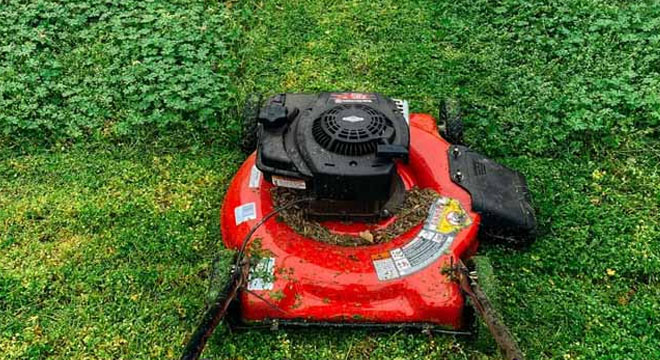
One blazing afternoon in July, I was up on a ladder fixing a leaky gutter for a client next door when I spotted her in her yard, wrestling with an old push mower. It was jerking along like it hadn’t been serviced in years, and she looked unsteady.
Before I could shout, the mower bucked forward, and she fell hard onto the grass.
“Mrs. Whitmore!” I dropped the wrench and jumped off the ladder, sprinting across the lawn.
She was pale, her hands trembling as she tried to sit up. “I’m fine, dear. Don’t fuss.”
“You’re not fine,” I said, crouching beside her. “Did you hit your hip?”
She winced and nodded slightly.
Jack, barefoot and trailing grass on his pants, came running from our porch. He grabbed onto my jeans and peered down at her.
“Daddy, is Grandma okay?”
That moment undid me. Something in the way he said it, with so much concern and innocence, hit me like a punch to the gut.
I helped her into the truck, drove straight to the ER, and waited while the doctors checked her over. It turned out to be a deep bruise, not a break, thank God. Still, the doctor gave her strict instructions to rest.
When we got back, I mowed her entire lawn while Jack sat on the porch, waving at her through the window. She looked embarrassed and grateful all at once.
Over the next few weeks, checking on her became part of our routine. I’d swing by after work with a meal or some groceries. Jack would bring her drawings or ask for cookies, and she always had a glass of lemonade waiting for him. She started calling him her little gentleman.
“Mr. Jack,” she’d smile. “You’re gonna break hearts one day, you know that?”
Jack would grin and puff up his chest. “I already have a girlfriend at school,” he’d say proudly, and she’d throw her head back and laugh.
One evening, I was fixing her kitchen faucet when I finally asked the question that had been bugging me.
“Do you have anyone else? Family who can come by sometimes? A daughter? Maybe a son?”
She paused, hands stilling over the dish towel she was folding.
“I have a son,” she said softly. “Paul. He lives out in Chicago. Works in finance, I think. Big job. Important life. We haven’t seen each other in years.”
There was a long silence.
I said, “He doesn’t visit?”
She shook her head, blinking a little too fast. “He calls on my birthday. Sometimes Christmas.”
I felt heat crawl up the back of my neck. My mom had passed away when I was a teenager, and if she were still here, I would be visiting her every week, maybe even every day.
“I’m so sorry,” I said, though it didn’t feel like enough.
She reached under the counter and pulled out a small wooden chest I had not noticed before. It was old, carved with faded symbols that looked Celtic or maybe Norse; I could not tell for sure.
“This was my husband’s,” she said, resting it in her lap. “And his father’s before him. We used to joke that it was cursed because it never stayed in one place too long.”
I chuckled. “Looks like something out of a fantasy movie.”
Her eyes softened. “I want you to have it.”
I blinked. “Mrs. Whitmore, I can’t take that. It’s a family heirloom.”
Her hand, wrinkled but surprisingly strong, covered mine.
“Aaron, you’ve done more for me in the last two months than Paul has in two decades. You and that sweet boy of yours… You gave me company, laughter, and peace.”
I didn’t know what to say. I didn’t want to insult her by refusing, so I nodded slowly and took the chest home that evening, tucking it in the back of my closet. I figured I’d return it to Paul if I ever met him.
Two weeks later, Mrs. Whitmore passed away in her sleep. Peaceful, the nurse said.
Her hand, wrinkled but surprisingly strong, covered mine.
“Aaron, you’ve done more for me in the last two months than Paul has in two decades. You and that sweet boy of yours… You gave me company, laughter, and peace.”
I didn’t know what to say. I didn’t want to insult her by refusing, so I nodded slowly and took the chest home that evening, tucking it in the back of my closet. I figured I’d return it to Paul if I ever met him.
Two weeks later, Mrs. Whitmore passed away in her sleep. Peaceful, the nurse said.
I did not know what hit me harder, the loss itself or watching Jack try to make sense of it.
“She’s really gone?” he asked, his eyes brimming. “But I didn’t get to say goodbye.”
I knelt and hugged him, burying my face in his soft brown curls. “I know, buddy. I didn’t either.”
Her funeral was small, with only a few neighbors, an old friend from church, and Jack and me. Paul did not show up.
I stood by her graveside with Jack holding tightly to my hand, the little chest already locked away at home. I thought about how people vanish, some like Hannah, in the middle of life and without warning, and others like Mrs. Whitmore, after giving everything they had to the world, still waiting for a knock on the door that never came.
That night, the sky turned. Thick clouds rolled in fast. The wind screamed through the trees, and rain came down in sheets. Power flickered. Jack crawled into bed with me, clutching his stuffed raccoon.
I sat awake, watching lightning light up the room in quick flashes.
That’s when the storm hit.
The power finally came back around 2 a.m., but I still could not sleep. I lay awake, staring at the ceiling fan as it creaked above us. Jack was curled up beside me, one hand gripping my shirt as if he thought I might disappear.
My thoughts kept drifting to that little wooden chest. Its weight, its age, and the way Mrs. Whitmore had given it to me made it feel heavier than just wood and sentiment. Even then, I did not think much of it beyond the memory of her kindness.
Two days later, there was a knock at the door.
It was early. Too early for a neighbor or a delivery. Jack was still brushing his teeth when I opened the door, and there stood a sharply dressed man in his late 40s, salt-and-pepper hair, a designer watch, and eyes that didn’t blink nearly enough.
Beside him stood a shorter, stiff-looking man in a navy suit holding a leather briefcase.
“You’re Aaron, right?” the first man asked, not offering a handshake.
I nodded, confused.
“I’m Paul Whitmore,” he said, his tone clipped. “This is my attorney.”
The lawyer gave a polite nod, but it was clear he wasn’t here to chat.
Paul’s eyes narrowed. “You’ve got something that belongs to my family.”
I furrowed my brow. “You mean the box? Your mother gave it to me.”
“That box is a Whitmore heirloom,” Paul snapped, stepping forward slightly. “It’s worth more than you’ll make in ten lifetimes. Hand it over, and I’ll… compensate you.”
He pulled out a checkbook and began scribbling before I even answered.
I crossed my arms. “I’m not interested in your money. Your mom gave it to me herself. She said it was a gift.”
Paul let out a harsh laugh, flipping the check toward me. “You think I care what she said? She was an old woman. Not in her right mind. That chest has been in our family for generations. You think mowing a few lawns and dropping off casseroles makes you family?”
“Don’t talk about her like that,” I said quietly, but firmly. “She was more of a mother to my son than his real grandma ever was.”
The lawyer cleared his throat. “Mr. Whitmore,” he said, directing his words to me instead of Paul. “We’d like to invite you to my office. There are… documents you should see.”
I blinked. “Documents? For a box?”
“Just come in. You’ll want to see this.”
Jack stood behind my leg by then, his wide eyes darting between the men.
“Daddy, what’s happening?”
I turned to him and smiled gently. “Nothing to worry about, bud. Just need to go talk to someone for a bit.”
Paul muttered under his breath as I walked past them to grab my keys.
At the office, things shifted quickly.
The lawyer handed me an envelope, thick with official papers and a handwritten letter in Mrs. Whitmore’s unmistakable cursive.
“To Whom It May Concern,
I, Eleanor Whitmore, being of sound mind, do hereby declare the wooden chest in my possession a personal gift to Aaron Mitchell, in thanks for his unwavering kindness and care. This is not a bequest. It is a present given freely, in my lifetime, and witnessed.
— Eleanor J. Whitmore”
The document was notarized, dated, and signed twice, once by her and once by a neighbor, I assumed.
Paul’s face turned a deep shade of red. “This is absurd! He manipulated her. This is theft!”
The lawyer stayed calm, folding the letter back neatly. “Your mother made her intentions very clear. She was of sound mind, and this document is legally binding. The chest belongs to Aaron. There’s nothing to contest.”
Paul slammed his hand down on the table, startling everyone. “You’ll regret this,” he hissed.
I stood slowly, heart pounding. “No, I don’t think I will.”
Outside, I carried the chest out like it weighed nothing at all. But my hands were trembling.
That night, when Jack had gone to sleep, I set the box on the kitchen table and stared at it. I’d never actually opened it. For weeks, it just sat in the back of the closet collecting dust.
I took a deep breath and lifted the lid.
I picked up my phone, opened the last message from the collector, and typed: “Not interested.”
Because in the end, the real gift wasn’t the box or the vacation. It was the reminder that kindness matters. That showing up, when no one else does, means something.
Mrs. Whitmore gave me more than an heirloom.
She gave me hope.And I’ll honor her not by selling off her memory, but by raising my boy with the same grace and strength she showed me.
That’s a legacy I’ll never let go of.